Hot News

August 6, 2026

Education

नशा मुक्त भारत अभियान के पांच वर्ष पूर्ण, त्रिपुरा-नागालैंड में जागरूकता कार्यक्रम आयोजित

नई दिल्ली/अगरतला/कोहिमा : नशा मुक्त भारत अभियान के पांच वर्ष पूर्ण होने के अवसर पर उत्तर-पूर्व के राज्यों त्रिपुरा और नागालैंड में सामाजिक न्याय एवं अधिकारिता मंत्रालय के मार्गदर्शन में संचालित नशा मुक्ति केंद्रों द्वारा विभिन्न जनजागरूकता कार्यक्रम आयोजित किए गए। कार्यक्रमों के दौरान प्रतिभागियों ने प्रधानमंत्री का संबोधन सामूहिक रूप से सुना तथा “नशा मुक्त मित्र” की शपथ लेकर समाज को नशामुक्त बनाने का संकल्प लिया। त्रिपुरा के दक्षिण त्रिपुरा जिले में स्वामी रामानंद शास्त्री वेलफेयर ट्रस्ट, नागालैंड के त्सेमिन्यु जिले में जनकल्याणकारी योजना प्रचार-प्रसार अभियान तथा कोहिमा जिले में सेंट जॉन्स यूथ फाउंडेशन द्वारा अभियान के अंतर्गत विशेष कार्यक्रम आयोजित किए गए। इस अवसर पर बच्चों के लिए चित्रकला प्रतियोगिता का आयोजन भी किया गया, जिसमें उन्होंने नशामुक्त समाज के संदेश को रचनात्मक रूप से प्रस्तुत किया। त्रिपुरा में परियोजना समन्वयक दीपांकर दास तथा नागालैंड में फिलिप के नेतृत्व में कार्यक्रम सफलतापूर्वक संपन्न हुए। वहीं, दिल्ली से इन राज्यों में अभियान का संचालन कर रहे अध्यक्ष पुशेष आत्रेय स्वयं कार्यक्रमों में उपस्थित रहे और नशा मुक्ति के प्रति जनभागीदारी को और अधिक सशक्त बनाने का आह्वान किया। इस अवसर पर पुशेष आत्रेय ने कहा कि देश के सीमावर्ती एवं सुदूर दुर्गम जिलों में नशा मुक्त भारत अभियान के तहत लगातार जागरूकता गतिविधियां संचालित की जा रही हैं। उन्होंने कहा कि समाज के सभी वर्गों, विशेषकर युवाओं और बच्चों की सहभागिता से ही नशामुक्त भारत के संकल्प को साकार किया जा सकता है।

Expert Opinion

Safe Harbour: Building Secure Spaces for People, Businesses, and the Digital World

BY: Pankaj Bansal , Founder at NewsPatrolling.com सुरक्षित आश्रय (Safe Harbour) कंपनियों के लिए कंपनियों के लिए सुरक्षित आश्रय बनाने का अर्थ है ऐसी प्रणालियाँ स्थापित करना जो लचीलापन (resilience) को बढ़ावा दें। इसमें शामिल हैं: मज़बूत शासन पारदर्शी संचार नैतिक नेतृत्व वित्तीय अनुशासन प्रभावी जोखिम प्रबंधन जो संगठन व्यवसाय निरंतरता योजना, कर्मचारी कल्याण और ग्राहक संतुष्टि में निवेश करते हैं, वे संकटों का बेहतर सामना कर पाते हैं। प्राकृतिक आपदाओं, महामारी या बाज़ार में गिरावट जैसी अप्रत्याशित घटनाओं के दौरान, ये व्यवसाय तेज़ी से उबरते हैं क्योंकि उन्होंने पहले से ही सुरक्षात्मक तंत्र बना रखा होता है। कानूनी सुरक्षित आश्रय प्रावधान कानूनी संदर्भ में, सुरक्षित आश्रय प्रावधान उन कानूनों या विनियमों को संदर्भित करते हैं जो व्यक्तियों या संगठनों को दायित्व से बचाते हैं, यदि वे निर्दिष्ट मानकों या आवश्यकताओं का पालन करते हैं। उदाहरण के लिए, कंपनियाँ यदि निर्धारित साइबर सुरक्षा मानकों, वित्तीय रिपोर्टिंग नियमों या पर्यावरणीय विनियमों का पालन करती हैं, तो अप्रत्याशित घटनाओं के बावजूद उन्हें कुछ कानूनी परिणामों से सुरक्षा मिल सकती है। ये प्रावधान जिम्मेदार व्यवहार को प्रोत्साहित करते हैं और जटिल नियामक वातावरण में व्यवसायों के लिए स्पष्टता प्रदान करते हैं। यह नवाचार को बढ़ावा देते हैं क्योंकि वे अनावश्यक कानूनी अनिश्चितता को कम करते हैं, बिना जवाबदेही से समझौता किए। कर्मचारियों के लिए सुरक्षित आश्रय एक उत्पादक कार्यस्थल वह है जहाँ कर्मचारी शारीरिक और मानसिक रूप से सुरक्षित महसूस करते हैं। संगठन जो सम्मान, विविधता, समावेशन और खुले संचार को प्रोत्साहित करते हैं, वे ऐसा वातावरण बनाते हैं जहाँ लोग बिना भेदभाव या उत्पीड़न के डर के अपने सर्वोत्तम विचार प्रस्तुत कर सकते हैं। मुख्य विशेषताएँ: समान अवसर निष्पक्ष नीतियाँ मानसिक स्वास्थ्य समर्थन पारदर्शी शिकायत तंत्र नेतृत्व की जवाबदेही सम्मानजनक संचार सुरक्षित महसूस करने वाले कर्मचारी अधिक प्रेरित, उत्पादक और वफादार होते हैं, जिससे संगठन की सफलता में सकारात्मक योगदान मिलता है। वित्तीय योजना में सुरक्षित आश्रय वित्तीय सुरक्षा भी एक महत्वपूर्ण सुरक्षित आश्रय है। व्यक्ति और व्यवसाय दोनों ही मुद्रास्फीति, बाज़ार अस्थिरता, चिकित्सा आपातकाल या अप्रत्याशित खर्चों जैसी अनिश्चितताओं का सामना करते हैं। वित्तीय सुरक्षित आश्रय बनाने के उपाय: आपातकालीन बचत बनाए रखना निवेशों का विविधीकरण उपयुक्त बीमा खरीदना ऋण का जिम्मेदारी से प्रबंधन सेवानिवृत्ति की योजना बनाना वित्तीय लक्ष्यों की नियमित समीक्षा ये उपाय कठिन समय में स्थिरता प्रदान करते हैं और आर्थिक झटकों के प्रति संवेदनशीलता को कम करते हैं। समुदाय और सामाजिक सुरक्षित आश्रय समुदाय भी सुरक्षित आश्रय बनाने में महत्वपूर्ण भूमिका निभाते हैं। स्कूल, स्वास्थ्य संस्थान, आश्रय स्थल, सामुदायिक केंद्र और सहायता संगठन कमजोर आबादी को सुरक्षा और सहायता प्रदान करते हैं। मजबूत समुदाय सहयोग, परस्पर सम्मान और साझा जिम्मेदारी को प्रोत्साहित करते हैं। आपात स्थितियों जैसे बाढ़, भूकंप या सार्वजनिक स्वास्थ्य संकट के दौरान, सामुदायिक सुरक्षित आश्रय जीवन की रक्षा और पुनर्प्राप्ति में महत्वपूर्ण हो जाते हैं। पर्यावरणीय सुरक्षित आश्रय जलवायु परिवर्तन ने पर्यावरणीय सुरक्षित आश्रयों की आवश्यकता को उजागर किया है। सतत बुनियादी ढाँचा, संरक्षित पारिस्थितिकी तंत्र, हरित शहरी योजना और आपदा-प्रतिरोधी निर्माण समुदायों को चरम मौसम घटनाओं का सामना करने में मदद करते हैं। नवीकरणीय ऊर्जा, जल संरक्षण और पर्यावरण संरक्षण में निवेश न केवल प्राकृतिक संसाधनों को संरक्षित करता है बल्कि आने वाली पीढ़ियों के लिए सुरक्षित जीवन स्थितियाँ भी बनाता है। आगे का मार्ग जैसे-जैसे तकनीक विकसित होती है और वैश्विक जोखिम अधिक परस्पर जुड़े होते जाते हैं, सुरक्षित आश्रय की परिभाषा भी विस्तृत होती जाएगी। कृत्रिम बुद्धिमत्ता, डिजिटल शासन, डेटा गोपनीयता और अंतरराष्ट्रीय सहयोग यह तय करेंगे कि समाज सुरक्षित वातावरण कैसे बनाते हैं। सफलता सरकारों, व्यवसायों, शैक्षणिक संस्थानों और नागरिकों के सहयोग पर निर्भर करेगी। सुरक्षित आश्रय अब केवल भौतिक स्थानों तक सीमित नहीं हैं—यह ऐसे तंत्र बनाने के बारे में है जो विश्वास जगाएँ, नवाचार को प्रोत्साहित करें और लोगों को उभरते जोखिमों से बचाएँ। निष्कर्ष सुरक्षित आश्रय केवल शरण का स्थान नहीं है—यह विकास, लचीलापन और विश्वास की नींव है। चाहे डिजिटल सुरक्षा, व्यवसाय संचालन, कानूनी संरक्षण, वित्तीय योजना, कार्यस्थल या समुदायों में लागू किया जाए, यह अवधारणा तैयारी और जिम्मेदारी पर जोर देती है। आज की तेज़ी से बदलती दुनिया में, जो संगठन और व्यक्ति सुरक्षित आश्रय बनाने में निवेश करते हैं, वे अनिश्चितताओं को पार करने और नए अवसरों को हासिल करने के लिए बेहतर स्थिति में होते हैं। ईमानदारी, नवाचार और सहयोग पर आधारित सुरक्षित वातावरण बनाकर, समाज भविष्य की चुनौतियों का अधिक आत्मविश्वास और स्थिरता के साथ सामना कर सकता है।  

Expert Opinion

Delimitation Bill : Redrawing India’s Electoral Map for Fair Representation

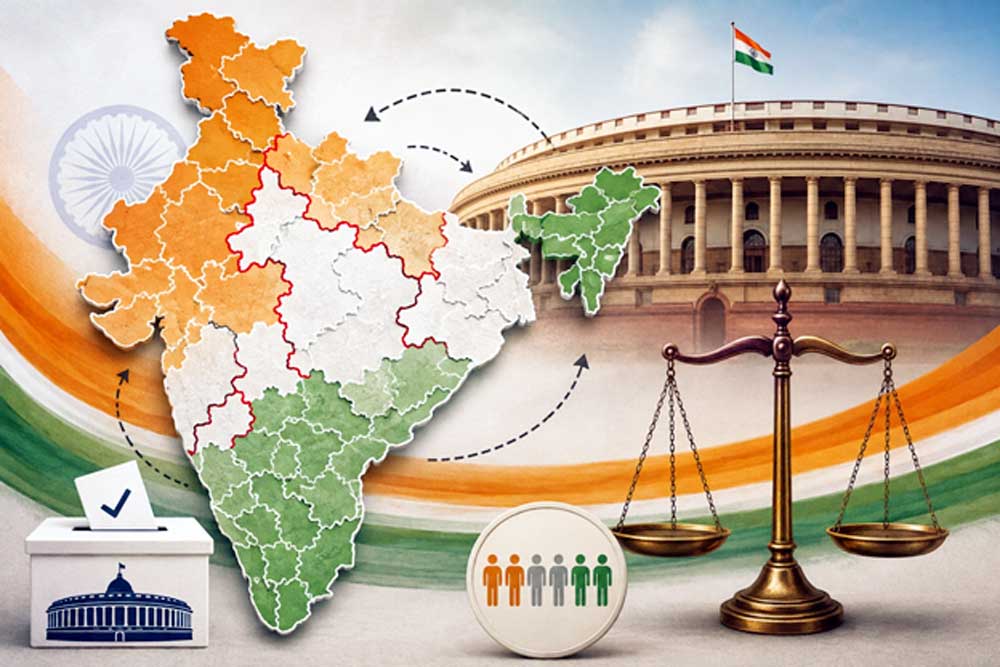
BY: Sonia Bansal, Editor at NewsPatrolling.com India, the world’s largest democracy, is built on the principle that every citizen deserves equal representation in the country’s legislative institutions. As populations shift over time due to migration, urbanization, and demographic changes, maintaining this balance becomes increasingly challenging. This is where the concept of delimitation comes into play. Although often referred to as the “Delimitation Bill,” it broadly represents the legal and constitutional framework that enables the redrawing of electoral constituency boundaries to ensure fair and equitable representation. Delimitation is the process of redefining the boundaries of parliamentary and state assembly constituencies based on population data from the latest Census. Its primary objective is to ensure that each elected representative speaks for a roughly equal number of citizens, thereby upholding the democratic principle of “one person, one vote.” Understanding Delimitation In India, delimitation is carried out by the Delimitation Commission, an independent statutory body appointed by the Central Government. The Commission typically includes a retired Supreme Court judge as its chairperson, the Chief Election Commissioner, and the respective State Election Commissioners. Once the Commission finalizes its recommendations, they have the force of law and cannot ordinarily be challenged in court. The process involves: Redrawing the boundaries of Lok Sabha and State Legislative Assembly constituencies. Allocating reserved constituencies for Scheduled Castes (SCs) and Scheduled Tribes (STs) based on their population. Ensuring that constituencies have, as far as possible, equal populations while considering geographical features, administrative boundaries, and communication facilities. Constitutional Provisions The Constitution of India provides the legal foundation for delimitation through Articles 82 and 170. After every Census, Parliament is empowered to enact legislation to facilitate the readjustment of constituencies. The Delimitation Acts passed by Parliament authorize the establishment of the Delimitation Commission. However, the allocation of Lok Sabha seats among states has been frozen for several decades. Initially frozen in 1976 to encourage states to adopt effective family planning measures without fearing a reduction in political representation, this freeze was later extended through the 84th Constitutional Amendment until the first Census conducted after 2026. While constituency boundaries were revised based on the 2001 Census, the total number of seats allocated to each state remained unchanged. Why Is Delimitation Important? Population growth in India has not been uniform across states. Southern and several western states have generally experienced slower population growth due to successful implementation of education and family welfare measures. On the other hand, several northern and central states have witnessed relatively higher population growth. As a result, many constituencies today represent vastly different population sizes. Some Members of Parliament represent over three million people, while others represent significantly fewer. Delimitation seeks to address such imbalances and make representation more equitable. A fresh delimitation exercise could also improve governance by: Making representation more balanced. Reflecting urban expansion and migration. Ensuring newly developed regions receive adequate political representation. Strengthening the democratic legitimacy of elections. Key Concerns and Challenges Despite its democratic objectives, delimitation remains a politically sensitive issue. One of the biggest concerns is the potential redistribution of parliamentary seats among states. States that have successfully controlled population growth worry that they may lose relative political influence if seat allocation is based solely on population. Conversely, states with higher population growth argue that greater populations deserve proportionately greater representation. Another challenge involves balancing numerical equality with geographical realities. Remote, mountainous, tribal, and sparsely populated regions often require special consideration to ensure effective representation despite having smaller populations. Political parties also closely watch the delimitation process because changes in constituency boundaries may significantly alter electoral prospects. While the Delimitation Commission functions independently, political debates surrounding its outcomes are almost inevitable. Potential Impact on Indian Politics The next nationwide delimitation exercise is expected to have far-reaching consequences for India’s political landscape. It could alter the balance of representation in the Lok Sabha, influence coalition politics, reshape electoral strategies, and affect the distribution of political power among states. Urban areas experiencing rapid population growth may receive greater representation, while rural constituencies could undergo substantial boundary adjustments. Political parties will need to adapt to changing voter demographics and newly constituted constituencies. The exercise may also renew discussions on increasing the total strength of the Lok Sabha so that representation improves without significantly reducing any state’s relative influence. Such proposals aim to balance demographic fairness with federal harmony. The Way Forward Delimitation is an essential democratic exercise that ensures electoral representation remains aligned with changing population realities. However, given India’s vast diversity and federal structure, the process must be conducted with transparency, impartiality, and sensitivity toward regional concerns. Any future legislation or policy related to delimitation should strive to balance the constitutional principle of equal representation with the legitimate concerns of states that have invested heavily in population stabilization and socio-economic development. Broad political consensus, public awareness, and institutional independence will be critical to maintaining confidence in the process. Conclusion Delimitation is more than a technical redrawing of electoral boundaries—it is a cornerstone of representative democracy. As India prepares for its next phase of electoral reforms following the post-2026 Census, the debate surrounding delimitation will continue to shape the country’s political future. If implemented fairly and transparently, the delimitation process can strengthen democratic institutions, improve representation, and ensure that every citizen’s vote carries equal value in the world’s largest democracy.

Business Buzz

Hon’ble Union Minister Shri Giriraj Singh Inaugurates 10th India International Footwear Fair (IIFF) 2026 at Bharat Mandapam

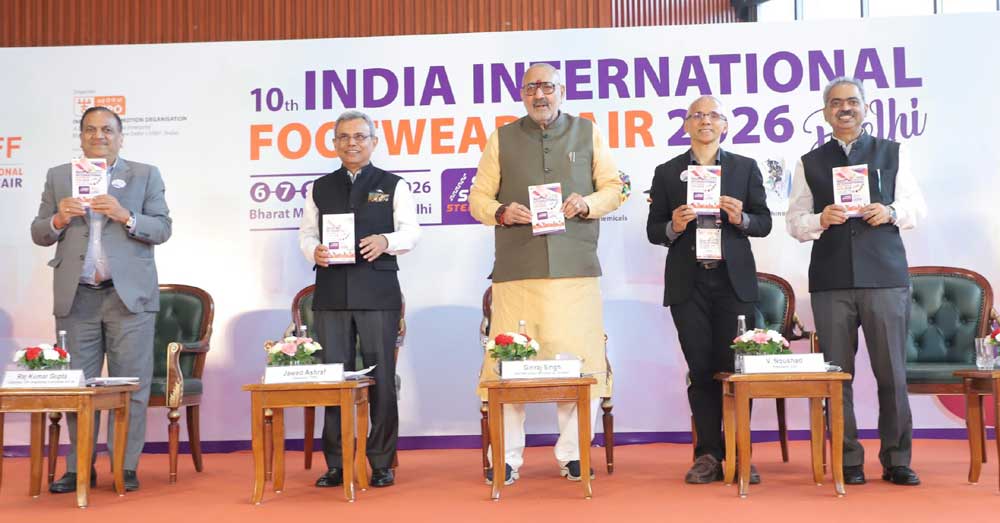
New Delhi : The 10th India International Footwear Fair (IIFF) 2026, organised by the India Trade Promotion Organisation (ITPO), an organisation under the Ministry of Commerce & Industry, Government of India, in association with the Confederation of Indian Footwear Industries (CIFI), was inaugurated today at Bharat Mandapam, New Delhi, by Shri Giriraj Singh, Hon’ble Union Minister of Textiles. The inaugural ceremony was graced by Amb. Jawed Ashraf, Chairman, ITPO; Shri Premjit Lal, Executive Director, ITPO; Mr. V. Naushad, President, CIFI; and Mr. Raj Kumar Gupta, Chairman, CIFI, along with senior government officials, industry leaders, exhibitors, buyers and international delegates representing the global footwear industry. The three-day B2B exhibition brings together leading footwear manufacturers, exporters, importers, buyers, technology providers and other stakeholders from India and abroad, providing a comprehensive platform to showcase innovations, strengthen business partnerships and explore new opportunities across the global footwear value chain. Welcoming the gathering, Mr. V. Naushad, President, CIFI, highlighted the remarkable growth of India’s footwear industry and underscored the importance of IIFF as a premier B2B platform for fostering innovation, strengthening manufacturing, promoting exports and facilitating business collaborations across the footwear value chain. Addressing the gathering, Amb. Jawed Ashraf, Chairman, ITPO, underscored the immense potential of India’s footwear industry, which provides employment to nearly 4.5 million people and accounts for approximately 12–13% of global footwear production. He observed that despite India’s strong manufacturing base, the country’s share in global footwear exports remains around 2%, and called for a collective effort by the Government, industry and ITPO to increase this share to 10%. He stressed the need to focus on non-leather footwear, attract leading global brands, strengthen India’s presence in global value chains and enhance the international profile of the sector. Highlighting ITPO’s vision for the future, Amb. Ashraf announced plans to transform IIFF into a globally recognised footwear exhibition on the lines of Bharat Tex, with enhanced scale, quality, visitor experience and international participation. He expressed confidence that future editions would witness greater global engagement, creating new opportunities for exports, investment and employment while positioning India as a preferred destination for the global footwear industry. In his keynote address, Shri Giriraj Singh, Hon’ble Union Minister of Textiles, congratulated ITPO and CIFI for organising the landmark edition of IIFF and appreciated the efforts of Amb. Jawed Ashraf, Chairman, ITPO, in strengthening ITPO as a leading trade promotion organisation. He highlighted the growing role of technical textiles in the footwear industry and encouraged manufacturers to leverage Government initiatives, including the Production Linked Incentive (PLI) Scheme, to enhance innovation, manufacturing capabilities and global competitiveness. The Minister also emphasised the need to expand international participation, foster technology partnerships and develop IIFF into a globally recognised platform that attracts buyers, exhibitors and investors from across the world. The Hon’ble Minister further underscored the immense growth potential of India’s footwear industry, particularly in the non-leather segment, and called for greater collaboration among industry stakeholders, technology providers and government agencies. He encouraged the sector to focus on innovation, design excellence, quality manufacturing and value addition to meet evolving global demand. Expressing confidence in India’s manufacturing capabilities, he said the sector is well-positioned to create employment, boost exports and contribute significantly to India’s journey towards becoming a global manufacturing hub. During the inaugural ceremony, the dignitaries released the IIFF 2026 Fair Guide, followed by the formal inauguration of the exhibition through a ribbon-cutting ceremony. The Hon’ble Minister also visited the exhibition halls and interacted with exhibitors, reviewing the latest innovations in footwear, machinery, components, raw materials and manufacturing technologies. The 10th India International Footwear Fair 2026 showcases a comprehensive range of footwear products, components, machinery, chemicals, leather and synthetic materials, manufacturing technologies and allied services. With participation from exhibitors across the footwear value chain and international representation from several countries, the exhibition provides an ideal platform for business networking, sourcing, technology exchange and export promotion. The exhibition will continue until 8 August 2026 at Hall No. 5 and 6, Bharat Mandapam, New Delhi, bringing together manufacturers, exporters, buyers, retailers, distributors and industry professionals from India and abroad to explore new business opportunities and strengthen global trade partnerships.

Business Buzz

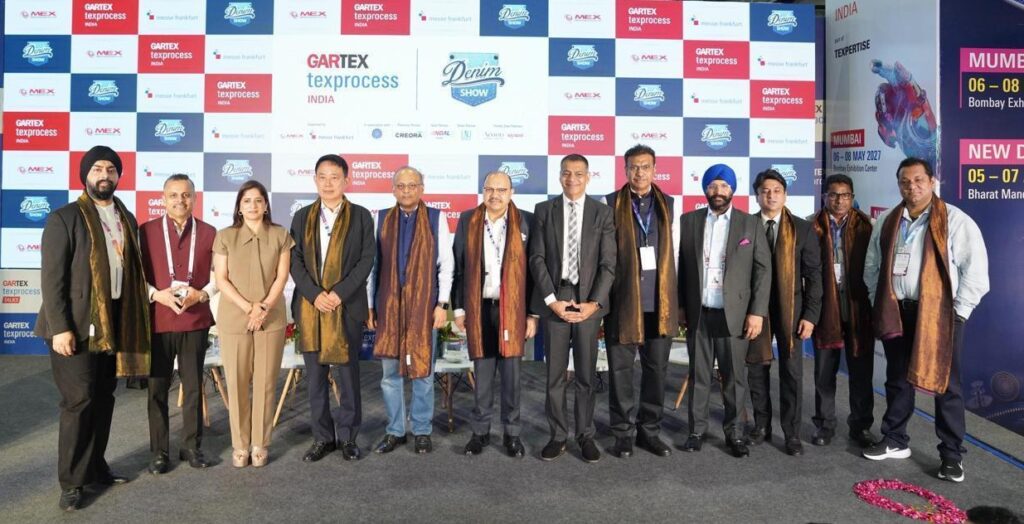
Gartex Texprocess India Delhi opens : Presents upcoming garment and textile technologies and denim solutions under one roof

New Delhi : Featuring advancements in textile machinery, technologies and denim fabrics, Gartex Texprocess India, incorporating Denim Show, opens today at Bharat Mandapam, New Delhi, attracting Indian and international buyers to an industry-wide showcase. Bringing together 190+ exhibitors, the expo presents over 700 brands and 1,200 products and feature 100+ new product launches spanning 14,580 gross sqm, becoming a meeting place for garment and textile machinery manufacturers, technology providers, distributors and businesses seeking modern textile opportunities. Gartex Texprocess India incorporating the Denim Show is showcasing a wide range of garment & apparel machinery, textile processing machinery, digital printing technologies, embroidery machines, spare parts, yarn processing machinery, and knitting machines. At the same time, Denim Show presents a different collection of denim mills, finishing & washing machines, dyes & chemicals, raw materials and laundry equipment. The participation of over 40 first-time exhibitors, together with companies from China, Japan, Singapore, Italy, Germany, Taiwan, Turkey and Hong Kong participating either directly or through their distributors/partners, reinforces the exhibition’s role as a strategic marketplace connecting Indian businesses with global manufacturing expertise and innovation. The show was inaugurated by an eminent panel of industry leaders, reflecting the strong support and collaboration of the textile and denim manufacturing ecosystem. The dignitaries included Shri Rajeev Gupta, Joint Managing Director of RSMW Ltd; Mr. Sharad Jaipuria, Chairman of the Denim Manufacturers Association and Chairman & Managing Director of Ginni International Ltd; Mr. Simon Lee, Managing Director of Hyosung Group (Hyosung Corporation India Pvt Ltd & Hyosung India Pvt Ltd); Mr. Abhinav Arya, Managing Director of Fabcare (India) Pvt Ltd; Mr. Murari, Managing Director of Baba Textile Machinery India Pvt Ltd; Mr. Deepak Chaudhary, Managing Director of Aura Technologies; Mr. Eswaran, Country Head of Mehala Machines India Pvt Ltd; Ms. Himani Gulati, Director of MEX Exhibitions Pvt Ltd; Mr. Raj Manek, Executive Director & Board Member of Messe Frankfurt Asia Holdings Ltd; Mr. Gaurav Juneja, Director of MEX Exhibitions Pvt Ltd; Mr. Winston Pereira, Executive Director of Messe Frankfurt Trade Fairs India Pvt Ltd; and Mr. Gagandeep Singh, Secretary General of the Denim Manufacturers Association. Their presence underscored the significance of the event as a premier platform for innovation, collaboration, and business growth in the textile and denim industry. On the occasion, Ms Himani Gulati, Director, MEX Exhibitions Pvt Ltd, shared: “Every edition of Gartex Texprocess India incorporating the Denim Show reflects how rapidly the garment and textile machinery manufacturing industry is evolving alongnwithh the denim secment. By bringing together technology innovators, manufacturers, policymakers and brands under one roof, the exhibition creates an environment where ideas are exchanged, investments are explored, and the future of textile manufacturing is shaped through meaningful industry engagement. Mr Raj Manek, Executive Director & Board Member, Messe Frankfurt Asia Holdings Ltd, expressed his thoughts as: “As India’s textile manufacturing sector continues to modernise, businesses are increasingly looking for technologies that improve efficiency, sustainability and product quality. Gartex Texprocess India incorporating the Denim Show is a focused B2B trade fair that has evolved into a platform where these B2B conversations translate into real business decisions, giving the industry access to innovations that will define the next generation of textile manufacturing. Beyond the exhibition floor, the expo offers a robust knowledge sessions programme under two tracks: Gartex Texprocess Talks: focusing on textile technologies and manufacturing, and Denim Talks covering the around the future of denim the future of the denim industry, activewear, export ambition of India in denims and many more. Selected sessions are developed in collaboration with industry knowledge partners. The event is organised jointly by MEX Exhibitions Pvt Ltd and Messe Frankfurt Trade Fairs India Pvt Ltd.The Denim Show incorporated under, it is organised with the support of the Denim Manufacturers’ Association (DMA).

World News

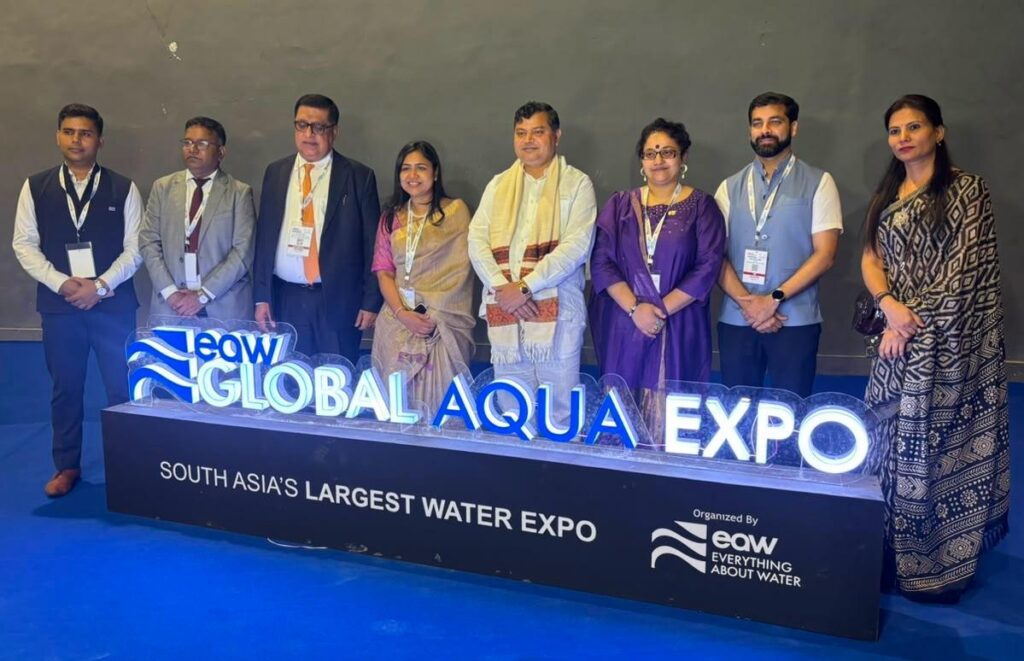
भारत मंडपम में ईएडब्ल्यू ग्लोबल एक्वा एक्सपो 2026 का आगाज़

नई दिल्ली :  भारत में जल सुरक्षा, जल संरक्षण और सतत जल प्रबंधन को नई दिशा देने के उद्देश्य से आयोजित ईएडब्ल्यू ग्लोबल एक्वा एक्सपो 2026 का गुरुवार को भारत मंडपम में शुभारंभ हुआ। अर्थ वाटर फाउंडेशन द्वारा आयोजित तीन दिवसीय यह आयोजन “नवाचार, सतत विकास और सहयोग के माध्यम से जल के भविष्य को आकार देना” विषय पर आधारित है। एक्सपो में देश-विदेश के नीति-निर्माताओं, उद्योग जगत के प्रतिनिधियों, तकनीकी विशेषज्ञों, शोधकर्ताओं, स्टार्टअप्स और जल क्षेत्र से जुड़े हितधारकों ने भाग लिया। कार्यक्रम का उद्घाटन भारत सरकार के केंद्रीय जल शक्ति राज्य मंत्री डॉ. राज भूषण चौधरी ने मुख्य अतिथि के रूप में किया। कार्यक्रम की शुरुआत जल कलश समारोह से हुई, जिसके बाद ‘इंडिया वाटर मैंडेट 2030’ विषय पर उद्घाटन सत्र आयोजित किया गया। इस दौरान देश की जल प्राथमिकताओं, जल प्रबंधन, नई तकनीकों, नीतिगत सुधारों और सतत विकास पर व्यापक चर्चा हुई। उद्घाटन सत्र की शुरुआत अर्थ वाटर फाउंडेशन की संस्थापक सुश्री शिवानी घोरावत के स्वागत भाषण से हुई। इसके बाद एसोचैम की सहायक महासचिव डॉ. अंबिका शर्मा ने नेतृत्व संबोधन दिया। एसोचैम नेशनल काउंसिल ऑन वाटर के सह-अध्यक्ष एवं किशोर पंप्स के संयुक्त प्रबंध निदेशक सिद्धार्थ के. देसाई ने विषय की रूपरेखा प्रस्तुत की, जबकि **एसोचैम नेशनल काउंसिल ऑन वाटर के सह-अध्यक्ष तुर्बाशु भट्टाचार्य ने धन्यवाद ज्ञापन दिया। इस अवसर पर भारत सरकार के केंद्रीय जल शक्ति राज्य मंत्री डॉ. राज भूषण चौधरी ने कहा कि विकसित भारत 2047 के लक्ष्य को साकार करने में जल सुरक्षा की केंद्रीय भूमिका होगी। उन्होंने कहा कि भविष्य की चुनौतियों का सामना करने के लिए सरकार, उद्योग, तकनीकी विशेषज्ञों, शोधकर्ताओं और समाज को मिलकर टिकाऊ, सशक्त और भविष्य उन्मुख जल प्रबंधन प्रणाली विकसित करनी होगी। उन्होंने कहा कि नवाचार, प्रभावी नीतियां और सर्कुलर वाटर मैनेजमेंट देश की दीर्घकालिक जल सुरक्षा और समावेशी विकास की मजबूत आधारशिला बनेंगे। अर्थ वाटर फाउंडेशन की संस्थापक सुश्री शिवानी घोरावत ने कहा कि जब इस मंच की शुरुआत हुई थी, तब देश में जल से जुड़े मुद्दों पर अलग-अलग स्तर पर चर्चा होती थी। आज 21 वर्षों बाद ईएडब्ल्यू ऐसा मंच बन चुका है, जहां नीति-निर्माता, उद्योग जगत, तकनीकी विशेषज्ञ और जल क्षेत्र के पेशेवर एक साथ आकर विचार-विमर्श करते हैं और उन्हें व्यावहारिक समाधान में बदलने का प्रयास करते हैं। एक्सपो के पहले दिन एसोचैम वाटर लीडर्स समिट का आयोजन भी किया गया, जिसका विषय था “नेविगेटिंग इंडियाज़ वाटर ट्रांजिशन: टेक्नोलॉजी, पॉलिसी एंड सर्कुलैरिटी”। इसमें औद्योगिक जल सुरक्षा, आर्टिफिशियल इंटेलिजेंस आधारित जल प्रबंधन, सर्कुलर वाटर इकोनॉमी, कौशल विकास और जलवायु अनुकूल जल अवसंरचना जैसे महत्वपूर्ण विषयों पर चर्चा हुई। इसी क्रम में आयोजित सीईओ वाटर लीडरशिप फोरम में आईओटीए ग्रुप, डब्ल्यूओजी ग्रुप, वीए टेक वाबाग और माइक्रोफिल्टर पॉलिमर्स लिमिटेड के वरिष्ठ अधिकारियों ने भाग लिया। फोरम में औद्योगिक जल सुरक्षा को मजबूत बनाने के लिए तकनीक, नवाचार और सहयोग की भूमिका पर विचार साझा किए गए। ईएडब्ल्यू ग्लोबल एक्वा एक्सपो 2026 के तहत प्रदर्शनी, सम्मेलन, बिजनेस नेटवर्किंग, मार्केट एक्सेस और नॉलेज जैसे पांच प्रमुख प्लेटफॉर्म के माध्यम से जल क्षेत्र के विभिन्न हितधारकों को एक मंच पर लाया गया है। ग्लोबल वाटर बिजनेस लाउंज में यूटिलिटी कंपनियों, ईपीसी कंपनियों, निवेशकों, निर्यातकों और तकनीकी प्रदाताओं के बीच व्यावसायिक संवाद हो रहे हैं, जबकि इनोवेशन स्पॉटलाइट एरीना** में नई जल तकनीकों, उत्पाद लॉन्च और स्टार्टअप नवाचारों का प्रदर्शन किया जा रहा है। आगामी दो दिनों में एक्सपो के दौरान वर्ल्ड सस्टेनेबल वाटर समिट का आयोजन होगा, जिसमें जल अवसंरचना, वित्तपोषण, वर्षा जल संचयन, जल पुनर्चक्रण, दक्षिण एशियाई सहयोग और जल लचीलापन जैसे विषयों पर चर्चा की जाएगी। इसके साथ ही ईएडब्ल्यू वाटर अकादमी के तहत ईटीपी, एसटीपी और जेडएलडी डिजाइन एवं ट्रबलशूटिंग पर विशेष तकनीकी मास्टरक्लास भी आयोजित किए जाएंगे। देश-विदेश के नीति-निर्माताओं, उद्योग जगत, शोधकर्ताओं, स्टार्टअप्स, एमएसएमई, जल विशेषज्ञों और तकनीकी कंपनियों की भागीदारी वाला यह आयोजन जल क्षेत्र में नवाचार को बढ़ावा देने, साझेदारी को मजबूत करने और भारत के लिए टिकाऊ जल समाधान विकसित करने की दिशा में एक महत्वपूर्ण पहल माना जा रहा है।

Scroll to Top